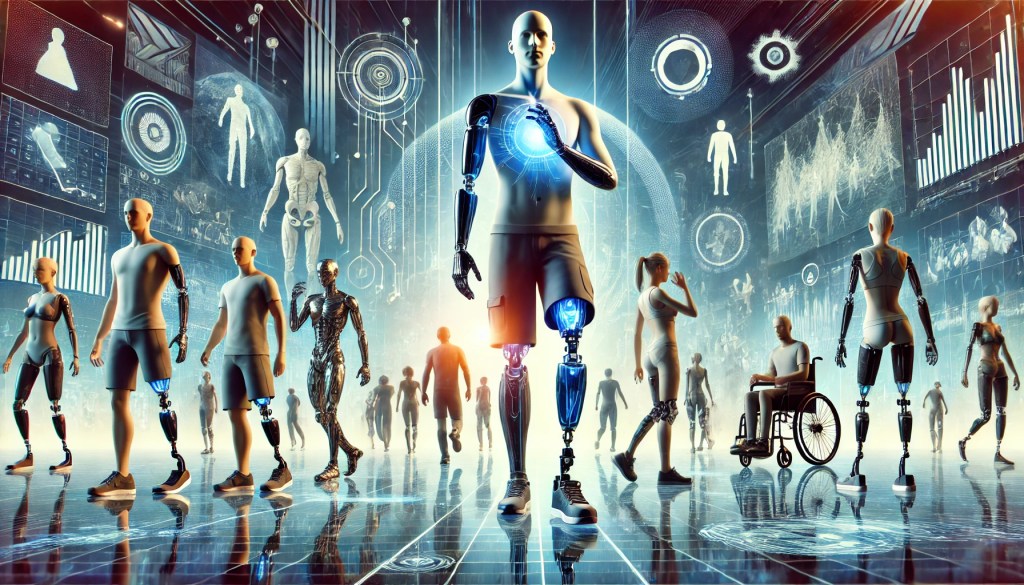
Prosthetic limbs so seamlessly integrated with the human body that they feel like a natural extension. This vision is rapidly becoming a reality, thanks to groundbreaking research in prosthetic embodiment. Join me on this exciting journey as we explore the profound relationship between prosthetic limbs and their users and discover how advanced technologies are enhancing this connection.
The Motivation Behind Our Research
For those with limb loss, achieving a high level of embodiment—feeling a prosthetic as part of the body—can transform their lives. Our mission? To deepen our understanding of prosthetic embodiment and pioneer innovative ways to measure and enhance this phenomenon.
What is Embodiment?
Embodiment involves ownership (feeling the prosthetic is part of you) and agency (controlling it as you would a natural limb). Traditional methods like the Rubber Hand Illusion (RHI) have paved the way, but our research aims to push the boundaries even further.
Our Experiment: Measuring Embodiment
We embarked on a journey to uncover the secrets of prosthetic embodiment. Combining methods like RHI, detailed interviews, and comprehensive questionnaires, we gathered rich data on how users perceive their prosthetic limbs.
- Participants: We engaged a variety of individuals with upper limb amputations who use prosthetic devices.
- Innovative Tasks: Through a series of tasks, we measured both explicit (self-reported) and implicit (unconscious) aspects of embodiment.
- In-Depth Insights: Detailed questionnaires and interviews provided a holistic view of their experiences and emotional connections with their prosthetics.
Key Findings: Insights That Excite
Our findings were nothing short of fascinating:
- Enhanced Sensory Feedback: Improved sensory feedback resulted in a stronger sense of ownership and control, highlighting the critical role of advanced sensory technologies.
- Proprioceptive Drift: This phenomenon, where the perceived position of a limb shifts towards the prosthetic, was significantly enhanced by synchronous sensory stimulation.
- Psychological Boost: Confidence and self-image greatly influenced the sense of embodiment, with more confident participants scoring higher in ownership and agency.
The Magic of Virtual Reality
One of the most thrilling aspects of our research is the use of Virtual Reality (VR). VR creates highly controlled, immersive environments where participants can interact with virtual prosthetics.
- Precision Control: VR allows for meticulous control over experimental conditions.
- Immersive Experience: Participants engage with virtual limbs in a way that feels real, providing deeper insights.
- Consistency: VR experiments are easily reproducible, enhancing the reliability of results across studies.
Conclusion
Our journey into prosthetic embodiment is uncovering new possibilities for creating prosthetics that feel like a natural part of the body. By understanding the intricate factors that influence embodiment and leveraging technologies like VR, we are paving the way for prosthetics that perform better and enhance the user’s quality of life.
Stay tuned as we continue to explore the fascinating world of prosthetic embodiment and push the limits of innovation. The future of prosthetics is bright, and we’re excited to be at the forefront of this revolutionary journey.
 ANNA EFA
Leave a comment